
How Long to Sell a Business: Timeline by Stage

Table of Contents
Why the Answer to "How Long to Sell a Business" Varies So Much
The Three Variables That Control Your Timeline
The Business Sale Timeline, Stage by Stage
Stage 1: Preparation and Valuation
Stage 2: Marketing and Buyer Search
Stage 3: Offers, Negotiation, and Due Diligence
Stage 4: Closing and Transition
How Long Does It Take to Sell a Small Business?
Your Business Sale Preparation Checklist
The Business Due Diligence Checklist Buyers Will Use
What Delays a Sale and How to Prevent It
Frequently Asked Questions
Last Updated: October 12, 2026
Why the Answer to "How Long to Sell a Business" Varies So Much
Most owners asking how long to sell a business get a range, not a guarantee. That is not a dodge. A Main Street company with clean books and steady sellers discretionary earnings (SDE) can move in a few months, while a messy one can sit for a year or more. At Brio Brokers Group, we tell sellers the same thing on day one: your timeline is set long before you list.
A business sale timeline is the total time from your first decision to sell until money changes hands. Three things control it, and only one is luck.
The Three Variables That Control Your Timeline
Deal size. Smaller companies under $500,000 in selling price take longer. Fewer buyers, less cash flow, higher owner involvement.
Financial records. Clean, organized Profit & Loss and Balance sheet cut months off due diligence.
Buyer financing. A cash buyer closes faster, but rare in Main Street deals. Lots of deals close with seller financing or SBA bank loans but that can adds weeks.
Fix the first two and the third gets easier. That is the whole game.
The Business Sale Timeline, Stage by Stage
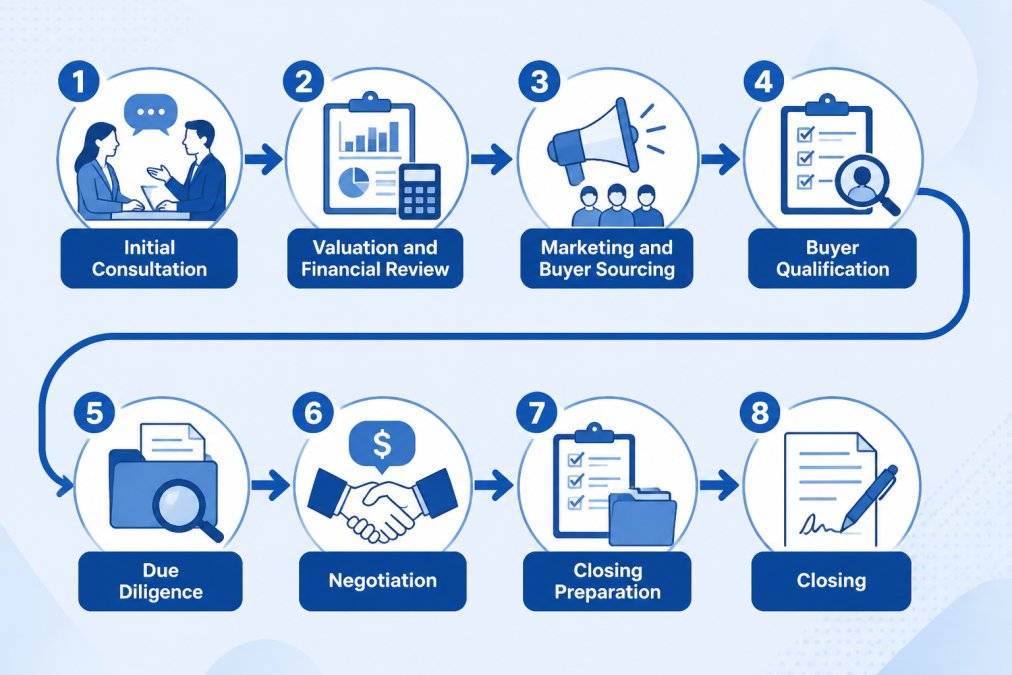
A typical sale runs through four stages. Each one has its own clock, and each one can stall if you skip the work.

Stage 1: Preparation and Valuation
This stage takes two to six months for most sellers. You gather tax returns, profit and loss statements, and a list of assets. A defensible valuation sets your asking price and gives buyers a number they can trust.
Skip this and you pay later. Buyers who find inflated numbers or lots of unanswered questions walk away during due diligence.
Stage 2: Marketing and Buyer Search
Expect three to twelve months here. Your broker writes a listing, markets it under confidentiality, and screens inquiries. Serious buyers sign a non-disclosure agreement and buyer profile before they see your financials.
Stage 3: Offers, Negotiation, and Due Diligence
This feels like the longest stretch, often two to four months. A buyer makes an offer, you counter, and then the buyer's starts digging into your books with their team. This is where weak records kill deals.
Stage 4: Closing and Transition
Closing takes two to eight weeks. Closing agreements are drafted, the buyer's lender funds the loan, and the business is transferred to the buyer. Many sellers stay on for a short training period, usually around 90 days.
How Long Does It Take to Sell a Small Business?
Most small businesses sell in six to twelve months from listing to closing as long as the business owner has prepared in advance. Companies above $500,000 in selling price often land on the faster end because cash flows are steady and they attract local buyers who want to close a deal with seller financing or use small loans.
Add your preparation time and the full process stretches out a year to 18 months. Sellers who start with clean books can shave months off that estimate.
Stage | Typical Duration | What Slows It Down |
Preparation and valuation | 2-6 months | Messy records, no valuation |
Marketing and buyer search | 3-12 months | Weak numbers, few buyers |
Offers and due diligence | 2-4 months | Accounting problems |
Closing and transition | 2-12 weeks | Financing delays |
Your Business Sale Preparation Checklist
A business sale preparation checklist keeps you ahead of buyers. Start it a year before you list if you can.
Gather three years of tax returns and profit and loss statements
Separate personal and business expenses
List every asset, from equipment to inventory
Document your customer base and repeat revenue
Get a defensible valuation from a qualified broker
Organize leases, licenses, and contracts
Write simple operating procedures for daily tasks
Set the business up for success by being less dependent on you
Prepare to stay on for a short transition
The Business Due Diligence Checklist Buyers Will Use
Buyers run a business due diligence checklist before they commit. Knowing it in advance turns a scary review into a routine one.
Financial statements for three years
Tax returns matching those statements
Bank statements and loan documents
Inventory counts and supplier agreements
Employee records and payroll history
Customer contracts and revenue breakdown
Equipment condition and maintenance logs
Outstanding debts, liens, or legal claims
Pro Tip Start your due diligence binder before you list. When a buyer asks for a document and you produce it the same day, you signal that the business is well run. That confidence alone keeps deals alive.
What Delays a Sale and How to Prevent It
The biggest delay is bad numbers. Buyers who find messy bookkeeping or missing information either walk or demand a lower price.
Other common stalls:
An unrealistic asking price that scares off serious buyers
Lack of operational documentation
Financing that falls through late in the process
Prevention is simple. Price from a real valuation, make sure documentation is thorough and in order, and make sure the business is less dependent on you, the seller.
Watch Out Never tell your staff or customers you are selling before you are ready. Word spreads fast, and spooked employees or nervous customers can hurt the very numbers you are trying to sell.
Frequently Asked Questions
How long does it typically take to sell a business?
Most small businesses sell in six to twelve months from listing to closing. Preparation before you list can add two to six months, and financing complications can push a deal past a year. Businesses priced accurately and with clean financial records often close near the faster end of that range, while those with unresolved tax issues or unclear cash flow tend to sit longer.
What are the stages of selling a business?
The process moves through four stages: preparation and valuation, marketing and buyer search, offers and due diligence, and closing with a transition period. Each stage has its own timeline, and skipping ahead, such as listing before your books are organized, usually adds time later. A broker can help you sequence these stages so a buyer's accountant does not find surprises mid-deal.
How long does due diligence take when selling a business?
Due diligence usually runs 30 to 90 days after you accept an offer. The buyer's accountant reviews tax returns, profit and loss statements, contracts, and payroll records. Deals move fastest when you have three years of clean financials ready in a shared folder. If records are incomplete or cash-based, expect the longer end of that range and multiple rounds of follow-up questions.
Selling a business takes months of steady work, and the owners who finish fastest are the ones who prepare first. If you are ready to move, Brio Brokers Group offers comprehensive, defensible valuations and personalized guidance built for owners in New Mexico. Our team brings hands-on entrepreneurial experience, a specialized focus on the local market, and resources for both first-time buyers and seasoned sellers. Contact us today and get a clear timeline for your sale.
CONTACT US TODAY


Comments